01 — OverviewWhat This Build Proves
This build — documented by the Tiny House Tour YouTube channel — makes a compelling case that budget and quality are not mutually exclusive in container home construction. A single 40-foot high cube container, owner-built with careful material selection, achieves results that most people would assume require professional labor and a six-figure budget.
For anyone researching what a realistic single-container build can achieve in terms of square footage, finish quality, and cost management, this is one of the clearest real-world examples available.
Watch on YouTube: youtu.be/nPsi0hQlAq4 ↗
02 — The ContainerWhy a 40-Foot High Cube
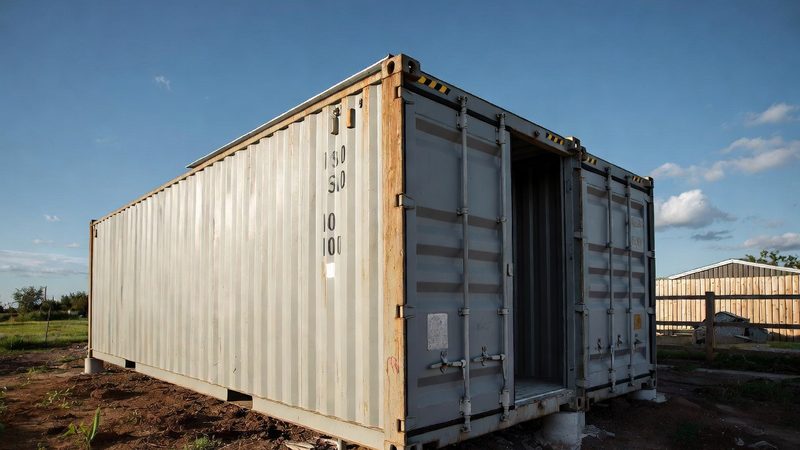
The container choice is the single most consequential decision in any container home build. This project uses a 40-foot high cube — the most popular container type for residential conversion — and the reasons are clear once you understand what happens to interior height after insulation.
| Spec | Standard 40-ft | 40-ft High Cube (This Build) |
|---|---|---|
| Exterior length | 40 feet | 40 feet |
| Exterior width | 8 feet | 8 feet |
| Exterior height | 8.5 feet | 9.5 feet |
| Interior height | 7’9” | 8’9” |
| Usable floor area | ~300 sq ft | ~300 sq ft |
| Post-insulation ceiling height | ~7 ft (tight) | ~8 ft (comfortable) |
| Typical price (used, WWT) | $2,500 – $4,000 | $3,000 – $5,000 |
That extra foot of vertical space is not aesthetic — it is functional. A standard container after spray foam, ceiling framing, and finished ceiling material can feel oppressively low. A high cube after the same treatment still reads as a normal room height.
Shop 40-Foot High Cube Containers
Browse current 40-ft high cube listings on eBay — the largest marketplace for used and one-trip shipping containers with nationwide seller coverage.
Browse eBay 40-ft Containers →03 — LayoutFitting a Home into 300 Square Feet
The 40-foot length and 8-foot width impose a linear constraint that defines everything. The home flows from end to end, with functional zones stacked along a single axis. What distinguishes this build is the application of high-end design principles to every layout decision: material continuity, layered lighting, built-in storage integrated into the structure, full-height cabinetry, and sightlines from entry to the far end that make the space read as larger than it is.
Typical single 40-ft container zone layout
- Entry / transition — often combined with storage or mudroom function
- Kitchen — galley-style along one wall, maximizing counter run within the narrow width
- Living / dining — combined open space, the visual centerpiece of the build
- Bathroom — full wet bath with shower, toilet, and vanity — one of the tighter design challenges in a narrow footprint
- Bedroom — at the far end for privacy, sometimes lofted to free floor space below
The 8-foot interior width (roughly 7’6” after framing and insulation) is narrower than most people expect. Plan furniture layout in 3D before cutting any steel. Mistakes in a container are expensive to reverse.
04 — ConstructionKey Systems and Decisions
Insulation — the most critical technical decision
Steel containers conduct heat and cold aggressively and generate significant condensation on interior walls without proper vapor management. This build uses closed-cell spray foam applied directly to the interior steel walls — the correct choice for longevity and comfort, and the one task most DIYers should hire out rather than attempt themselves.
- Closed-cell spray foam bonds directly to metal and acts as both insulation and vapor barrier
- Typical application: 2–3 inches on walls and ceiling, achieving R-13 to R-21
- Floor insulation is equally important — steel floor conducts cold directly from the ground
- Cost: $3,000–$6,000 for a 40-foot container professionally applied
- DIY foam kits exist but are insufficient for full coverage at the required thickness
Container Home Insulation on Amazon
Closed-cell spray foam kits, rigid foam board, and vapor barriers for DIY container builds. Ships Prime.
Shop Insulation on Amazon →HVAC — mini-split is the right answer
A well-insulated 40-foot container is a compact, easy space to condition. Mini-split ductless heat pump systems are the near-universal choice: efficient, requiring only a small wall penetration, and providing both heating and cooling from a single unit. A single 12,000–18,000 BTU unit is typically sufficient for a single-container home.
Electrical & plumbing
Container home electrical follows standard residential wiring principles but runs through conduit or inside finished wall cavities due to the steel shell. Plumbing routes supply and drain lines through or below the container floor. Tankless water heaters are common due to space efficiency. Permit requirements vary dramatically by jurisdiction — some counties have clear pathways for container homes; many do not.
Windows and doors
Cutting openings in a shipping container requires a plasma cutter or angle grinder and must be reinforced with steel tube framing to restore structural integrity. Window placement is one of the highest-impact design decisions in a narrow linear space — natural light is the most powerful tool for making a small space feel larger.
05 — The FormulaHigh-End Results on a DIY Budget
The central insight of this build is that premium visual results come from labor substitution, not premium spending. Four components make it work:
06 — CostsFull Budget Breakdown
The video doesn’t publish a full itemized budget, but the following framework reflects what a high-quality single 40-foot container DIY build typically requires:
| Category | DIY Cost Range | Notes |
|---|---|---|
| Container (used, wind/watertight) | $3,000 – $5,000 | Plus $500–$1,500 delivery |
| Foundation (piers or slab) | $1,500 – $8,000 | Concrete piers are common and cost-effective |
| Spray foam insulation | $3,000 – $6,000 | Hire a pro — DIY kits are insufficient |
| Framing and sheathing | $800 – $2,000 | Interior walls, blocking, ceiling drops |
| Windows and doors | $2,000 – $6,000 | Quality matters here — thermal and aesthetic impact |
| Electrical (materials) | $1,500 – $3,000 | Panel, wire, outlets, fixtures; permits extra |
| Plumbing (materials) | $1,200 – $3,000 | Supply, drain, water heater, fixtures |
| Mini-split HVAC | $700 – $1,500 | DIY install possible on some brands |
| Flooring | $800 – $3,000 | LVP is the sweet spot for durability and cost |
| Kitchen (cabinets, counters, appliances) | $3,000 – $10,000 | Biggest range — IKEA to custom |
| Bathroom (tile, fixtures, vanity) | $1,500 – $4,000 | |
| Interior finishes (paint, trim, lighting) | $1,000 – $3,000 | Where the high-end look is achieved |
| Permits and inspections | $500 – $3,000+ | Highly variable by jurisdiction |
| Contingency (10–15%) | $2,500 – $5,000 | Always include this line |
| TOTAL (DIY labor) | $25,000 – $60,000 | Wide range reflects finish level and site conditions |
Get a Full Blueprint Package Before You Build
A proper plan set prevents the most expensive mistakes. Find permit-ready container home blueprints on Amazon from $29 — including 40-ft single-container plans with electrical and plumbing layouts.
Browse Blueprint Sets on Amazon →07 — Trade-offsChallenges to Plan For
Permitting and zoning
Container homes occupy an ambiguous space in most building codes. Rural land with agricultural zoning is often the path of least resistance. Urban and suburban lots frequently face significant regulatory hurdles. Research local zoning and building department attitudes before purchasing land or a container. See our Florida and Texas state guides for specific permitting information.
Resale and financing
Container homes are non-conforming structures in most markets. Traditional mortgage financing is typically not available — buyers use personal loans, construction loans, or cash. Resale to a broad buyer pool is limited. Approach a container home as a long-term owner-occupied or rental asset rather than expecting conventional appreciation and liquidity.
The 8-foot width constraint
The interior width after framing and insulation is roughly 7’6”. It is narrower than most people expect when they first stand in the shell. Furniture selection, layout planning, and visual tricks — light colors, mirrors, open shelving — all help, but the constraint is non-negotiable.
Thermal performance in extreme climates
A well-insulated container home performs adequately in most climates. In very hot or cold regions, careful attention to insulation thickness, window specification, and roof shading is required. The steel roof absorbs significant solar heat — a radiant barrier or green roof meaningfully reduces cooling loads in hot climates like Florida and Texas.
08 — TakeawaysKey Lessons for Prospective Builders
8 things this build teaches
- The 40-foot high cube is the right container for residential use — the extra ceiling height is not optional once insulation is factored in.
- Closed-cell spray foam is non-negotiable for a quality build, and the one task to hire out — professional equipment and technique are required.
- High-end results come from material selection and finish quality, not container size. Flooring, lighting, and kitchen surfaces define how a space feels.
- Labor is the budget. A DIY builder invests hundreds of hours into a single container build — that time substitutes directly for contractor cost.
- Solve permitting before buying anything. Land, container, or materials purchased before confirming a permitting pathway is money at risk.
- Mini-splits are the right HVAC solution — efficient, space-saving, and correctly sized for a single container home.
- Plan the build in 3D before cutting any steel. Window placement, door swing, furniture layout, and plumbing runs all interact in a narrow linear space.
- Budget 10–15% contingency without exception. Container builds routinely encounter unexpected costs at the foundation, permitting, and finishing stages.
- How container homes are built
Ready to Buy Your Container?
Browse pre-built container homes and raw 40-ft containers on eBay — the largest marketplace with nationwide seller coverage and delivery options.
Browse Container Homes on eBay →