01 — OverviewThe Premium End of Container Conversion
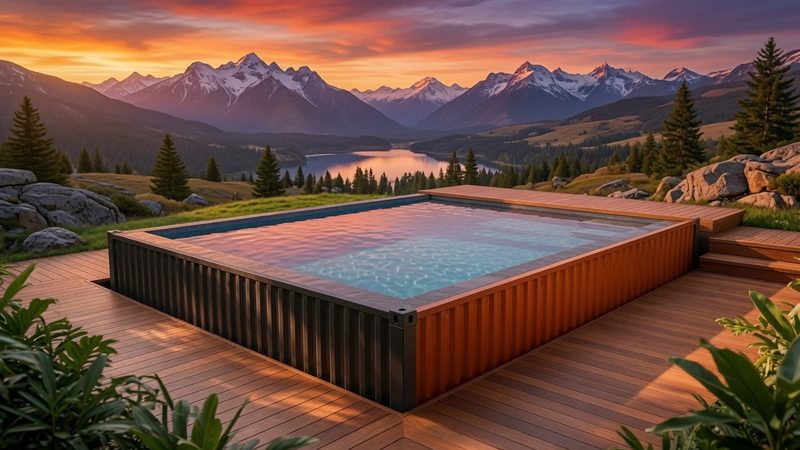
Magnolia Network’s Cappie and Alex transform a standard shipping container into a luxury backyard swimming pool complete with underwater viewing windows and a resort-caliber deck surround. The result moves well beyond the utilitarian “container as pool shell” concept into genuine high-end outdoor living design.
This build represents the premium end of the container pool spectrum — where structural ingenuity meets hospitality-level finish quality. It serves as both an inspiration piece and a practical case study in what separates an entry-level container pool from a showcase installation.
Watch on YouTube: youtu.be/GL8_-WDMv4U ↗
02 — Why a Container Pool?Container vs. Traditional In-Ground
Shipping containers have emerged as a compelling alternative to traditional in-ground gunite or fiberglass pools. The case for them is clearer than most people expect.
| Factor | Traditional In-Ground | Container Pool |
|---|---|---|
| Installation time | 6–12 weeks typical | 2–6 weeks typical |
| Cost range | $40,000–$100,000+ | $20,000–$145,000 depending on finish |
| Structural warranty | Concrete/gunite: decades | Container steel: very long-lived with proper coating |
| Portability | Permanent | Theoretically moveable |
| Customization | Any shape | Constrained to rectangular container dimensions |
| Aesthetic | Traditional pool look | Industrial-modern, highly distinctive |
| Unique features | Standard options | Underwater windows are a container-native advantage |
Buy a Container for Your Pool Build
Browse 40-ft and 20-ft shipping containers on eBay — the largest marketplace for used and one-trip containers with nationwide delivery. One-trip containers are ideal for pool builds where water integrity is paramount.
Browse 40-ft Containers on eBay →03 — The ContainerSelecting the Right Unit for a Pool
Size and configuration
- 20-foot container: ~160 sq ft water surface, 8 ft wide — suitable for a plunge pool, exercise pool, or small family pool. More manageable for DIY excavation and placement.
- 40-foot container: ~320 sq ft water surface — full swimming experience, lap pool potential, more dramatic visual presence. This is the configuration used in the Magnolia Network build given the resort-scale deck proportions. Holds approximately 15,000–17,000 gallons.
Open-top vs. standard container
Pool builds use either a standard container with the roof removed (plasma cutter or angle grinder) or purpose-sourced open-top containers. Open-top containers eliminate the roof-removal step though cost slightly more. The top rail must be reinforced after roof removal to maintain structural rigidity once the corrugation is gone.
Container condition for pool use
Unlike a home conversion where a “wind and watertight” used container is acceptable, a pool build should use a container with minimal interior rust. Surface rust can be treated and coated, but deep pitting compromises the container as a water vessel. One-trip (nearly new) containers are the right choice for pool builds where water integrity is paramount.
04 — The Underwater WindowThe Signature Feature
The underwater viewing window is the most technically distinctive element of this build — the feature that elevates it from a utilitarian container pool to a resort-caliber installation. Cappie and Alex’s build includes this as a centerpiece, visible from outside the pool through the deck structure.
How underwater windows are constructed
- A rectangular opening is cut in the container wall below the waterline using a plasma cutter
- The opening is reinforced with welded steel tube framing to restore structural continuity
- A purpose-built underwater window frame — acrylic or tempered glass rated for hydrostatic pressure — is installed and sealed with marine-grade sealant and mechanical fasteners
- The exterior side is incorporated into the deck structure, creating a viewing alcove
Waterproofing at the window frame perimeter is the single most important detail in the entire build. Any failure here results in water intrusion into the surrounding structure. Professional fabrication and installation is strongly recommended.
| Property | Acrylic (Plexiglass) | Tempered Glass |
|---|---|---|
| Clarity | Excellent, slight blue tint possible | Excellent, optically flat |
| Impact resistance | High — does not shatter | Breaks into small safe pieces |
| Scratch resistance | Lower — scratches with cleaning | High |
| Thickness required | 1.5–2+ inches for pool pressure | 0.75–1+ inches tempered |
| Cost | Lower for large panels | Higher, especially thick panels |
| DIY friendliness | More workable, can be cut to size | Must be ordered to exact dimension |
05 — WaterproofingThe Most Critical System
A shipping container is designed to keep water out, not in. Converting it to hold thousands of gallons under constant hydrostatic pressure requires comprehensive waterproofing treatment of the entire interior. This is the decision that determines pool longevity.
Surface preparation
- All interior surfaces must be cleaned of rust, grease, paint, and debris
- Rust treatment: wire brush or grind to bare metal, followed by rust converter or phosphoric acid wash
- All holes, seams, and welds must be ground smooth and inspected for structural integrity before any coating is applied
Waterproofing system options
The Magnolia Network build almost certainly uses polyurea or a high-quality epoxy system given the emphasis on resort-quality results and long-term durability.
06 — The DeckWhere the Money Actually Goes
The deck surround transforms a steel box in the ground into a cohesive outdoor living installation. In the Magnolia Network build, the deck is a signature design element — not an afterthought. The deck budget often equals or exceeds the combined container and waterproofing cost.
Design principles
- Level deck surface flush with or slightly above the container top rail — creates the appearance of a traditional in-ground pool
- Material selection: composite decking (low maintenance), natural hardwood (ipe, teak), or concrete pavers
- Coping: the cap material at the pool edge where deck meets water. Bullnose tile, natural stone, or poured concrete coping all significantly affect the final aesthetic
- Underwater window integration: requires a framed alcove or step-down section in the deck plan — must be designed from the beginning, not added later
- Equipment access: pump, filter, and heater must be accessible for maintenance — plan access panels or a dedicated equipment enclosure into the deck structure
- Safety fencing: most jurisdictions require pool safety fencing regardless of pool type
Pool equipment sizing for a 40-ft container
- Circulation pump: sized to turn over 15,000–17,000 gallons every 6–8 hours
- Filtration: sand filter (lower maintenance) or cartridge filter
- Sanitization: saltwater chlorination is popular for its lower chemical cost and gentler feel on skin
- Heating: gas, heat pump, or solar. Note: container steel walls absorb solar heat more readily than white plaster pools — a benefit or challenge depending on climate
- LED lighting: color-changing underwater LEDs are a low-cost feature that transforms nighttime pool use
07 — Cost BreakdownBudget to Magnolia-Level
| Component | Budget Build | Mid-Range | Magnolia-Level |
|---|---|---|---|
| Container (one-trip 40-ft) | $5,000–$7,000 | $5,000–$7,000 | $5,000–$7,000 |
| Excavation and placement | $3,000–$6,000 | $5,000–$8,000 | $6,000–$10,000 |
| Roof removal / reinforcement | $500–$1,500 | $1,000–$2,500 | $1,500–$3,000 |
| Waterproofing (interior) | $800–$2,000 | $2,000–$5,000 | $5,000–$10,000 |
| Underwater window(s) | None | $2,000–$5,000 | $5,000–$12,000 |
| Plumbing penetrations & fittings | $500–$1,500 | $1,000–$2,500 | $2,000–$4,000 |
| Pool equipment (pump, filter, heater) | $2,000–$4,000 | $4,000–$7,000 | $7,000–$15,000 |
| Deck and coping | $3,000–$8,000 | $8,000–$18,000 | $20,000–$50,000+ |
| Electrical (lighting, pump, GFCI) | $1,000–$2,500 | $2,000–$4,000 | $4,000–$8,000 |
| Exterior finish | $500–$1,500 | $1,500–$4,000 | $4,000–$10,000 |
| Permits and inspections | $500–$1,500 | $1,000–$2,500 | $1,500–$3,000 |
| Contingency (10–15%) | $2,000–$3,800 | $3,300–$6,500 | $6,200–$13,200 |
| TOTAL ESTIMATE | $19,800–$38,800 | $36,800–$72,000 | $67,200–$145,200+ |
The gap between a budget container pool and a Magnolia-level result is almost entirely in the deck, coping, and feature investment — the container and waterproofing are roughly the same cost across all three tiers. Spend on the deck.
08 — PermittingWhat to Confirm Before Excavation
- Container pools require the same pool permit as any in-ground pool in most jurisdictions — structural engineering, electrical inspection, and safety fencing sign-off
- The container itself may require a separate review as a non-standard pool vessel — confirm with the local building department before purchasing
- Setback requirements apply — minimum distances from property lines, structures, and utilities must be confirmed before siting the excavation
- All pool electrical must comply with NEC Article 680 — GFCI protection, bonding of all metal components, and minimum distance rules for outlets and fixtures
- HOA approval is typically required regardless of permit status
Always confirm pool permit requirements before excavation. An unpermitted pool is an uninsured pool — and a significant liability when selling the property.
09 — TakeawaysWhat This Build Teaches
6 lessons from the Magnolia Network container pool
- The underwater window is the single most impactful feature that separates a premium container pool from a basic one — and the most technically demanding. Professional fabrication and installation is strongly recommended.
- Waterproofing is the most consequential build decision for longevity. Polyurea coating is the premium standard; epoxy pool paint is acceptable for budget builds but requires periodic reapplication every 3–5 years.
- The deck budget often equals or exceeds the container and waterproofing cost combined. The deck is what the eye sees — skimping here undermines the entire investment.
- A 40-foot container pool holds 15,000–17,000 gallons — the same as many standard residential pools. Equipment must be sized for this volume, not undersized to save upfront cost.
- Use a one-trip (nearly new) container for a pool build. Surface rust can be treated, but deep pitting in a used container compromises water integrity — a failure mode with no good fix after the build is complete.
- Confirm pool permit requirements before excavation. An unpermitted pool is an uninsured pool and a liability at resale.
- Rooftop deck guide
Inspired? See What Else You Can Build
Browse container home and container pool builds on eBay — pre-built and custom container conversions with nationwide delivery options.
Browse Container Builds on eBay →Plan Your Container Build
Blueprint sets for container conversions on Amazon — including structural modification guides for cut-outs, window openings, and reinforcement specifications.
Browse Blueprint Sets on Amazon →